Buy an Akiya in Japan: Akiya Banks and Real Costs (2026)
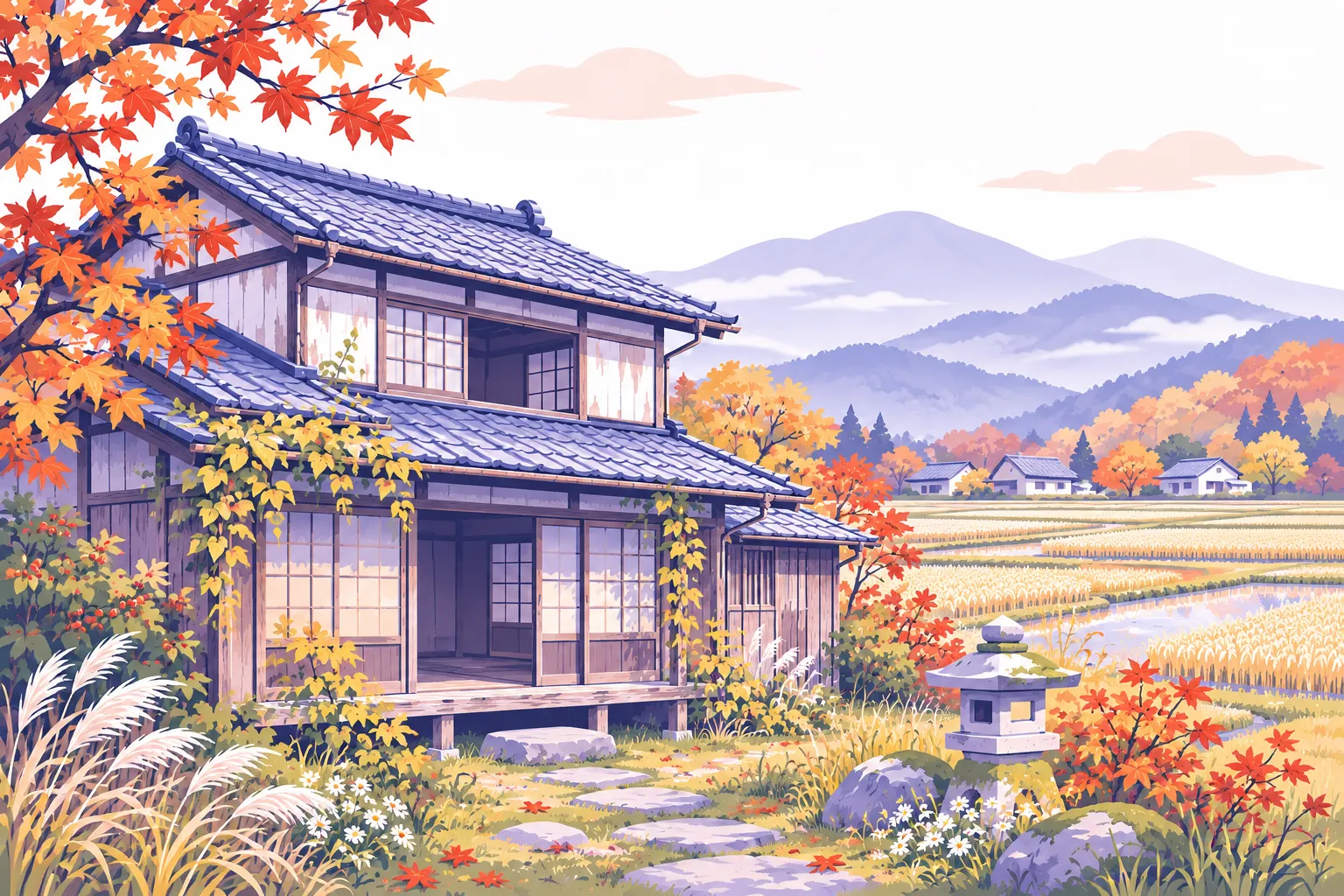
Akiya (空き家) means “empty house”. Japan had 9.0 million vacant homes in 2023, 13.8% of all housing, and about 3.86 million of them were not for sale, for rent or used as second homes: the abandoned houses people usually mean by akiya. Anyone, including foreigners and non-residents, can buy one, often for a very low price through a municipal “akiya bank”. But the price is usually the smallest cost. Repairs, demolition, taxes and legal problems decide whether an akiya is a bargain, and cheap akiya are almost never in central Tokyo.
This guide explains how akiya banks work, what an akiya really costs, the tax rules that punish neglected houses, the legal traps, and how to buy one.
What is an akiya?
Japan’s Housing and Land Survey, run every five years by the Statistics Bureau, counts vacant homes in four groups. The 2023 results (final figures published in September 2024):
| Type of vacant home | Number (2023) | What it means |
|---|---|---|
| All vacant homes | 9,002,000 (13.8% of all homes) | Every empty dwelling, a record high |
| “Other” vacant homes (賃貸・売却用及び二次的住宅を除く空き家) | 3,856,000 (5.9% of all homes) | Not for rent, not for sale, not a second home: the true akiya |
| Vacant homes for rent, for sale, or second homes | the rest | Empty apartments between tenants, homes on the market, holiday homes |
Houses and apartments are empty for different reasons: about 80.9% of vacant detached houses were in the “other” group, while about 78.5% of vacant apartment units were rentals waiting for tenants. When people talk about akiya, they usually mean these empty detached houses.
How do akiya banks work?
An akiya bank (空き家バンク) is a listing service run by a municipality. Owners who want to sell or rent an empty house register it, and the municipality passes the listing to people who want to use it. The Tokyo Metropolitan Government describes the aim as helping people settle in the municipality, which explains why some akiya banks only deal with people who intend to live there.
- National search. The Ministry of Land, Infrastructure, Transport and Tourism (MLIT) supports a nationwide akiya bank run by two property portals, LIFULL HOME’S and at home. It started as a trial in October 2017 and fully in April 2018. By the end of February 2026, 1,134 of Japan’s 1,788 local governments (63%) took part, with 19,075 listings and about 24,700 deals closed in total.
- Direct or through an agent. Depending on the municipality, you deal with the owner directly or through a local licensed agent. In a direct deal, no registered real estate transaction specialist (宅地建物取引士) has to explain the important matters to you, so you must check the legal points yourself.
- Conditions vary. Some akiya banks require you to move in, register as a resident, or meet age or family conditions. Okutama, a town in western Tokyo, offers houses donated to the town to young families, who receive the house free after living there for 15 years, according to a Tokyo Metropolitan Government report from November 2025.
Why cheap akiya are rarely in Tokyo
Tokyo has many empty homes, but few akiya of the cheap, rural kind:
- In 2023, 10.9% of homes in Tokyo were vacant. In the preliminary results, only about 215,000 of them, 2.6% of Tokyo’s housing, were in the “other” group. Most of Tokyo’s vacant homes are rental apartments between tenants.
- Land in the 23 wards is valuable, which gives owners a strong reason to sell, rebuild or let an empty house rather than leave it. A used condo in the 23 wards sold for an average of ¥73.2 million (about US$460,000) in October 2026; see buy an apartment in Tokyo.
- The Tokyo government’s akiya bank policy is aimed at the cities, towns and villages of the Tama area and the islands. We did not find an akiya bank run by any of the 23 wards.
- On 19 November 2026, the national akiya bank on LIFULL HOME’S showed 27 listings in the whole of Tokyo. Examples were in Ōshima island (¥9 million, with farmland), Ōme (for rent at ¥80,000 a month) and Okutama (¥2 million), all far from central Tokyo.
A very cheap house inside the 23 wards is usually cheap for a reason: it cannot be rebuilt, it sits on leased land, or it needs major work. Check the legal points below before you get excited about one.
What does an akiya really cost?
| Cost | Typical level | Notes |
|---|---|---|
| Purchase price | From free to a few million yen in rural areas | Often sold as-is, with no seller liability for defects |
| Agent’s fee | Up to ¥330,000 including tax for properties of ¥8 million or less | MLIT special rule since July 2024; see below |
| Registration and taxes | Registration tax, stamp duty, real estate acquisition tax, judicial scrivener’s fee | See the cost of buying property in Japan |
| Survey and inspection | Varies | Boundary survey, building inspection, termite check |
| Renovation | Varies widely | Roof, plumbing, wiring, insulation, termite damage |
| Demolition | ¥30,000–¥60,000 per tsubo (3.3 m²) for a wooden house | LIFULL HOME’S, July 2025; a 30-tsubo house is roughly ¥900,000 (about US$5,660) to ¥1,800,000 (about US$11,300) |
| Yearly costs | Fixed asset tax, insurance, upkeep, travel | Continue whether or not you use the house |
The agent’s fee rule for cheap properties. Normally the brokerage fee is capped at a percentage of the price, which gives agents little reason to handle a ¥1 million house. Since 1 July 2024, MLIT’s fee notice lets an agent charge more for land or buildings priced at ¥8 million or less, up to ¥330,000 (about US$2,080) including tax from each client, as long as the fee is explained and agreed before you sign the brokerage contract. On a ¥1 million house, the agent’s fee can be a third of the price.
Renovation. MLIT’s housing market survey for FY2025 (published July 2026) found that renovations in the three big metropolitan areas averaged about ¥1,700,000 (about US$10,700) (median ¥700,000 (about US$4,400)). Those are ordinary renovations of lived-in homes. A house that has stood empty for years with leaks or termites can need far more, so get a builder’s written quote before you buy, not after.
Demolition. Before demolishing a building of 80 m² or more, or doing renovation work of ¥1 million or more, the contractor must survey for asbestos and report the results (rule in force since April 2022, Ministry of the Environment). Old houses may contain asbestos, which raises the cost.
Subsidies. Many municipalities help akiya bank buyers. Saitama Prefecture’s list for FY2025 included, for example, up to ¥500,000 (about US$3,140) in Sakado City (including a bonus for akiya bank homes) and up to ¥600,000 (about US$3,770) in Ogawa Town; Hatoyama Town’s larger grant had no budget for FY2026. Okutama subsidises demolition up to ¥500,000 (about US$3,140). Subsidies have budgets and conditions that change every year, and many must be applied for before you sign or start work.
How the Vacant Houses Act can raise your taxes
Land with a house on it gets a big fixed asset tax reduction (住宅用地の特例):
| Part of the plot | Fixed asset tax base | City planning tax base |
|---|---|---|
| First 200 m² | 1/6 of the assessed value | 1/3 |
| Above 200 m² | 1/3 | 2/3 |
The Act on Special Measures for Vacant Houses (空家等対策の推進に関する特別措置法), amended in force from 13 December 2023, lets municipalities act against neglected houses in two stages:
- Poorly managed vacant house (管理不全空家等). A new category from December 2023 for houses that could become dangerous if left. The municipality can give guidance and then a formal recommendation (勧告).
- Specified vacant house (特定空家等). A house that is dangerous, unsanitary or badly damaging the landscape. The municipality can give guidance, a recommendation, then an order, and finally demolish it itself at the owner’s cost (代執行). The amendment added emergency demolition for urgent cases.
Once either kind of recommendation is issued, the land loses the reduction above. On the first 200 m², the land’s fixed asset tax base can rise to as much as six times its previous level. Breaking an order can bring an administrative fine of up to ¥500,000 (about US$3,140). In short, buying an akiya and leaving it to decay is not a cheap way to hold land.
Legal and practical traps
| Trap | What it means | How to check |
|---|---|---|
| Cannot rebuild (再建築不可) | Under the Building Standards Act, a plot must touch a legal road (generally 4 m wide or more) for at least 2 m. If not, you may not be allowed to rebuild once the house is gone | Ask the municipality’s building department about the road in front |
| Urbanisation control area (市街化調整区域) | Under the City Planning Act, building, rebuilding or changing the use of a house here needs the prefectural governor’s permission, apart from listed exceptions | Ask the city planning department for the zoning |
| Farmland included | Buying farmland needs permission from the agricultural committee under Article 3 of the Farmland Act, and only buyers who will farm it efficiently get it | Check the land category (地目) on the register |
| Unregistered building (未登記建物) | Some old houses or extensions were never registered. Whoever acquires an unregistered building must file a title registration within one month | Compare the register with the actual building |
| Seller not the registered owner | Inherited houses are often still registered to a dead parent. Inheritance registration has been mandatory since 1 April 2024 (within three years, fine up to ¥100,000), but older cases may still be pending | The heirs must register before they can sell to you |
| Old earthquake standard | Houses designed before June 1981 were built to the old standard | Ask for the building confirmation date; budget for an assessment or retrofit |
| Boundaries | Rural plots often have unclear boundaries with neighbours | Ask for a boundary survey (境界確定) before you buy |
| Infrastructure | Septic tank instead of sewer, private well, poor road access in winter | Ask the municipality and visit in different seasons |
Since 1 April 2026, owners must also register changes of name or address within two years (fine up to ¥50,000). If you move after buying, update the register.
Can foreigners buy akiya?
Yes. Japan has no nationality or residency requirement for owning a house or land, so foreigners and non-residents can buy akiya like anyone else. The general rules still apply:
- Non-residents must report the purchase under the Foreign Exchange and Foreign Trade Act within 20 days; since April 2026 this includes homes for your own use. See buying property in Japan as a non-resident.
- Nationality is recorded. Since 5 October 2026, every individual registering ownership must state and prove their nationality.
- An akiya does not give you a visa. Owning a house gives no right to live in Japan, and the Business Manager visa for people who run a business in Japan was tightened on 16 October 2025 (¥30 million capital, a full-time employee and Japanese language ability, among other conditions).
- The akiya bank may have its own conditions, such as moving in or registering as a resident.
The can foreigners buy property in Japan guide covers these rules in full.
Is buying an akiya a good idea?
It can be, if you match the house to a clear plan:
- It suits people who will live in the area, who can manage renovation work locally, and who have budgeted for repairs well beyond the price.
- It rarely suits people looking for an investment to rent out from overseas (see Japan real estate investment for foreigners for the alternatives), buyers who need a loan, or anyone hoping for a cheap home in central Tokyo. In towns with falling populations, there may be few tenants, and few buyers when you want to sell.
How to buy an akiya, step by step
- Choose the municipality first. Read its akiya bank rules and subsidy conditions, and contact its office.
- Visit the house and the town. Check the road, the slope, the neighbours, and how you would get there in winter.
- Check the register and the zoning. Get the land and building register extracts (登記事項証明書) and ask the municipality about roads, zoning and hazard maps.
- Inspect. Have a builder or inspector look at the roof, foundations, plumbing and termite damage, and get quotes.
- Agree the deal. Use a licensed agent if you can. If you deal directly, put everything in a written contract, including what stays in the house and who clears it.
- Apply for subsidies before you sign or start work, if the rules require it.
- Register the transfer through a judicial scrivener (司法書士), and file the foreign exchange report if you are a non-resident.
For the yearly taxes on what you buy, read property tax in Japan for foreigners.
Frequently asked questions
Are there really free or ¥1 million houses in Japan?
Yes, some akiya are listed for very little or even offered free, almost always in rural areas with falling populations. The purchase price is usually the smallest part of the total cost once repairs, demolition, taxes and upkeep are added.
Do I need to live in Japan to buy an akiya?
Not to own one. Japan has no nationality or residency requirement for owning property. But many municipal akiya banks exist to attract new residents, and some only deal with people who plan to live in the town.
What can I do with an akiya I inherited and do not want?
You can sell it, give it away, or, since April 2023, apply to hand the land over to the national government under the inherited land transfer system. That route has a review fee of ¥14,000 per parcel plus a charge equal to ten years of management costs, and the land must meet strict conditions.
Can I turn an akiya into a holiday rental?
Only with the right permission. You need either a registration under the private lodging law, which caps the number of nights per year, or an inn business licence, and many municipalities add their own rules. Check with the municipality before you buy.
Is it safe to buy an akiya without seeing it?
It is risky. Problems such as rot, termites, leaks, road access and boundaries are hard to judge from photos, and most cheap akiya are sold as-is. Visit, ideally in more than one season, and have the house inspected.
Sources
US dollar figures use ¥159 = US$1, the approximate rate on November 16, 2026.
Get the free Tokyo renting checklist
A one-page checklist of what to prepare before you rent in Tokyo, plus new guides by email. No spam, unsubscribe anytime.